












Creatine Guide: How Much to Take, Which Form to Buy, and Why (NZ)
Creatine explained for Kiwis — the dose, the forms on the shelf, and how to pick the one you'll actually take every day.
Creatine monohydrate is the most-studied sports supplement there is: 3–5 g a day, any time, every day — no loading and no cycling off needed. It supports strength, power and training volume in short, hard efforts. See which form suits you or shop creatine at Xplosiv.
On This Page
What is creatine?
Creatine is the fuel your muscles use for short, hard efforts — a heavy set, a sprint, a jump — and a 3–5 g daily supplement keeps that tank full. Your body makes some and meat and fish add some; most of it sits in muscle as phosphocreatine, a fast-access energy reserve. Vegetarians usually start with less of it, which is one reason they often notice a larger change when they supplement.
Creatine monohydrate is the most-studied form and the one most of the research is built on. It is not a steroid, not a stimulant, and not related to caffeine — it is a compound your muscles already use every day. Every creatine product on our shelves supplies this same compound; the formats differ in how it is bound, mixed and taken.
How does creatine work?
Creatine works by keeping your muscles' quick-charge battery — phosphocreatine — topped up. Hard efforts drain your muscles' immediate energy (ATP) in seconds; phosphocreatine recharges it on the spot, so a bigger store means one more hard rep or a few more metres at full pace before fatigue sets in.
That is why creatine shows up in strength, power and repeated high-intensity work — lifting, sprints, team sport — and not in steady, low-intensity exercise, where a different energy system does the work. It is not a stimulant: you don't feel it kick in; you see it in your training numbers over weeks.
What does creatine do for training?
Creatine monohydrate supports more strength, more power and more quality reps over a training block — the International Society of Sports Nutrition's 2017 position stand rates it among the most effective performance supplements studied. By outcome:
- Strength and power: supports maximal strength and repeated high-intensity efforts during structured training.
- Training volume and lean mass: by supporting higher-quality sessions, creatine can indirectly support lean-mass gains over a training block.
- Women, vegetarians and older adults: the research covers both sexes, and people with lower baseline muscle creatine — many vegetarians, older adults — often see a larger relative benefit.
Where it does less: pure steady-state endurance events (runners, see our Running Fuel guide). And because creatine draws a little extra water into muscle, expect a small rise on the scales — water in muscle, not fat, and worth knowing in a weight-class sport. Every format in the next sections delivers these same effects; the choice is about how you'll take it.
How much creatine should you take?
The daily dose of creatine monohydrate is 3–5 g, at any time of day, every day including rest days — consistency matters more than timing. Taking it with carbohydrate may support uptake in some protocols, but it isn't required. Creatine HCL products are dosed by bodyweight instead; the label on the tub gives the chart.
| Approach | Amount | Notes |
|---|---|---|
| Daily dose (monohydrate) | 3–5 g a day | Any time, every day, rest days included |
| Creatine HCL | By bodyweight, as labelled | Roughly one 700–750 mg capsule or scoop per 45 kg |
| With carbohydrate | Optional | May support uptake; not required |
Missed a day? Just carry on. Muscle stores fall slowly — over weeks, not days — so one missed dose changes nothing. Take it whenever you'll remember: with breakfast, in a shake, or with dinner. Powder gives you full control of the dose; capsules, tablets and gummies pre-measure it for you.
Do you need to load creatine?
No — a creatine loading phase is optional. Loading (around 20 g a day in split doses for 5–7 days) fills muscle creatine stores in about a week; 3–5 g a day gets to the same point in around 3–4 weeks. Load if you want it faster, or keep it simple with the daily dose.
| Protocol | Time to full stores | Who it suits |
|---|---|---|
| Loading (~20 g a day, split, 5–7 days) | ~1 week | Want it faster; fine with a higher short-term dose |
| Daily dose (3–5 g a day) | ~3–4 weeks | Prefer a simple, steady routine |
What you'll notice, and when. Nothing on day one — creatine is not a stimulant. As stores fill, look for an extra rep or two on hard sets and better-quality sessions, not a feeling. If a loading dose sits heavily, skip loading and take 3–5 g a day, or split the loading dose across meals.
Which creatine is right for you? Monohydrate, HCL, capsules, gummies and blends
The right creatine format depends on how you'll take it: plain monohydrate powder for value, flavoured for taste, capsules for convenience, gummies for the easiest habit, HCL for a small serve that mixes clear. Every one of them gets creatine into your muscles; creatine monohydrate is the most-studied form and the default, and the rest exist because people mix, swallow and stick to routines differently. Powder gritty? Stir it into warm water or a shake, or pick a micronised powder or HCL.
Creatine monohydrate vs HCL at a glance
| Creatine monohydrate | Creatine HCL | |
|---|---|---|
| Solubility | Standard; micronised mixes smoother | About 38 times more water-soluble; dissolves in a small glass |
| Creatine per serve | A 5 g scoop carries about 4.4 g of creatine (the rest is bound water) | A 3 g serve carries about 2.4 g of creatine (the rest is the hydrochloride) |
| Typical serve | 3–5 g a day | By bodyweight as labelled, about 700–750 mg per 45 kg |
| Formats here | Powder, flavoured, capsules, tablets, gummies, chews | Powder, capsules |
| Pick it if | You want the most-studied form at the best value | You want a small serve that mixes clear, or monohydrate sits heavily |
The formats on our shelves
Monohydrate powder, plain and micronised
- Best for
- Value and dose control.
- Good to know
- The most-studied form and the one the research is built on. Micronised or 200-mesh is the same monohydrate milled finer, so it mixes smoother.
- Serve
- 3–5 g a day.
Flavoured monohydrate
- Best for
- People who never finish a plain tub.
- Good to know
- Same monohydrate, ready-flavoured. Check the scoop weight on the label for grams of creatine per serve.
- Serve
- 3–5 g of creatine a day.
Creatine HCL, powder and capsules
- Best for
- A small serve that dissolves clear, or if monohydrate sits heavily.
- Good to know
- Creatine bound to hydrochloride, about 38 times more water-soluble than monohydrate. In a 2024 eight-week head-to-head trial both forms improved strength, with no significant difference between them.
- Serve
- By bodyweight, as labelled — roughly one 700–750 mg capsule or scoop per 45 kg, before training on training days. Follow the chart on your tub.
Capsules and tablets
- Best for
- Travel, desk and no-mixing routines.
- Good to know
- Pre-measured and tasteless. Count capsules to your serve from the label — for example, four 750 mg capsules give 3 g.
- Serve
- 3–5 g of creatine a day for monohydrate; by bodyweight for HCL.
Gummies and chews
- Best for
- The easiest daily habit.
- Good to know
- Chewable, no shaker. The label states creatine per piece; take the number that reaches your daily serve.
- Serve
- 3–5 g of creatine a day.
Multi-form blends
- Best for
- One all-in-one training formula.
- Good to know
- Several creatine forms, often with supporting ingredients, in a single scoop.
- Serve
- 3–5 g of total creatine, as labelled.
Creatine + carbohydrate formulas
- Best for
- After training, when you also want the calories.
- Good to know
- Creatine paired with fast carbohydrate in one drink. The ISSN position stand notes carbohydrate taken with creatine may support uptake.
- Serve
- As labelled.
You may see buffered or nitrate forms on other shelves; the formats above are what you'll find at Xplosiv, in-store and online.
How to choose in 30 seconds
Choosing a creatine at Xplosiv takes four questions: mix or swallow, plain or flavoured, small serve or standard, calories or not.
- Mix, swallow or chew?Mix → a monohydrate powder. Swallow → capsules or tablets. Chew → gummies or chews.
- Plain or flavoured?Plain → unflavoured monohydrate, the best value per gram. Flavoured → a flavoured monohydrate or a blend.
- Want a small serve that mixes clear, or does monohydrate sit heavily?→ Creatine HCL, powder or capsules, dosed by bodyweight.
- Want the calories with it after training, or everything in one scoop?Calories → a creatine + carbohydrate formula. One scoop → a multi-form blend.
Whatever you pick, take it every day. All of these formats are available online and in Xplosiv stores nationwide, with click & collect. Browse the creatine range.
Is creatine safe? What the research says
Creatine is one of the most-studied supplements in sports nutrition, and daily use at 3–5 g is well tolerated by healthy adults. The common worries, against the evidence:
- Kidneys? At standard doses creatine has not been shown to impair kidney function in healthy adults. It can raise blood creatinine, a test marker, without that meaning kidney injury. If you have a kidney condition, check with a health professional first.
- Hair? A 12-week randomised controlled trial (Lak 2025; 45 resistance-trained men, 5 g a day) found no difference in hair outcomes between creatine and placebo.
- Cramping or dehydration? Research does not support creatine as a cause of cramping or dehydration at recommended doses. Drink to thirst as you normally would; there is no gallon-a-day rule.
- Scale weight? Creatine draws a little extra water into muscle, which can show as a small rise on the scales — water in muscle, not fat.
- Cycling off? Not required. A daily 3–5 g keeps stores topped up; there is no need to stop and start.
This guide is for general education only and is not medical advice. Creatine supplements are not medicines and are not intended to diagnose, treat, cure, or prevent any disease. If you are pregnant, breastfeeding, under 18, have a kidney condition or other medical condition, or take prescription medicines, talk to a qualified health professional before use. Competitive athletes should check current anti-doping advice for their sport.
Buying creatine in New Zealand
Every format in this guide is available online at xplosiv.nz and in Xplosiv stores across New Zealand, with click & collect so you can pick up same-day rather than wait on a courier. If you follow a vegetarian diet — common among Kiwi gym-goers cutting back on red meat — you likely start with lower muscle creatine than a meat-eater, and that profile often sees a larger relative benefit from supplementing.
If you compete under a sporting body's anti-doping code, creatine itself is not a banned substance; check your sport's current advice and look for third-party tested options, which you can filter for on the creatine category page.
Creatine FAQ
Creatine monohydrate vs HCL: what's the difference?
Creatine monohydrate is the most-studied form and the best value per gram. Creatine HCL is creatine bound to hydrochloride, about 38 times more water-soluble, so it comes in smaller serves dosed by bodyweight. A 2024 head-to-head trial found no significant difference in strength gains between them.
Is creatine HCL worth it?
Yes, if you want a small serve that mixes clear in a glass, prefer capsules, or find monohydrate sits heavily. If none of that applies, monohydrate gives you the most-studied form at the best value.
Do you need to load creatine?
No. Loading (around 20 g a day in split doses for 5–7 days) fills muscle stores in about a week; 3–5 g a day gets there in about 3–4 weeks. Creatine HCL products skip loading and dose by bodyweight.
Are creatine gummies as effective as powder?
Gummies deliver the same creatine monohydrate; what matters is the grams you take each day. Read the creatine per piece on the label and take the number that reaches your daily serve. Powder is the cheapest way to hit the dose, gummies the easiest.
How many gummies or capsules equal 5 g of creatine?
It depends on the product. The label gives creatine per capsule or per gummy; divide your target dose by that figure. For example, four 750 mg capsules give 3 g. Creatine HCL capsules are dosed by bodyweight instead.
Which creatine is best for a sensitive stomach?
Many people who find plain monohydrate sits heavily do better with a micronised monohydrate, which mixes smoother, or creatine HCL, which dissolves fully in a small serve. Skipping the loading phase also helps.
Does creatine cause bloating?
Creatine draws some water into muscle, which can add a small amount of scale weight; that is water in muscle, not fat. Most people notice nothing at 3–5 g a day. If a big loading dose sits heavily, take the daily dose instead.
How much creatine should I take, and when?
3–5 g of creatine monohydrate a day, at any time, every day including rest days. Consistency matters far more than timing, and a missed day changes nothing — stores fall over weeks, not days. Creatine HCL products state a bodyweight dose on the label.
How long does creatine take to work?
Creatine works as muscle stores fill: about a week with a loading phase, about 3–4 weeks at 3–5 g a day. You won't feel it — it isn't a stimulant. Look for an extra rep or two on hard sets once stores are full.
Do I take creatine on rest days?
Yes. Creatine works by keeping muscle stores full, not by acting on the day you take it, so 3–5 g every day — rest days included — is the routine. Timing around training makes no difference.
Is creatine OK for women and vegetarians?
Yes. Creatine research covers both sexes; it is not a men-only supplement. Vegetarians usually start with lower muscle creatine than meat-eaters and often notice a larger relative benefit.
What's the best creatine to buy at Xplosiv NZ?
For most people, a creatine monohydrate powder: the most-studied form at the best value. Prefer no mixing? Capsules or gummies. Want a small serve that mixes clear? Creatine HCL. Browse the full creatine range to compare formats and pack sizes.
Shop Creatine
Six creatine products to start with, picked by role: best value, our top powder, the most-reviewed gummies, best value HCL, and the two Xplosiv capsule options. Ratings are as shown on each store in September 2026.
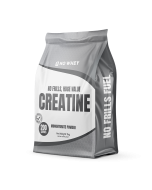 Best value creatine
NoWhey Creatine Monohydrate 1kg
200 serves of unflavoured monohydrate in one bag.
Shop Now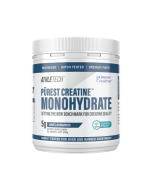 Our top creatine powder
Athletech Purest Creatine Monohydrate 250g
HASTA-tested monohydrate — our pick for athletes who get drug-tested.
Shop Now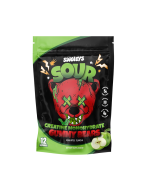 Most-reviewed gummies
Swoleys Creatine Monohydrate Gummies 12 Serve
Sour apple gummies — a pre-dosed daily habit, no shaker.
Shop Now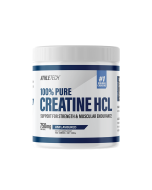 Best value HCL powder
Athletech Pure Creatine HCL 300g
400 scoops of HCL, dosed by bodyweight.
Shop Now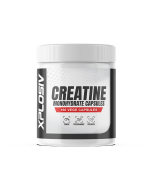 Monohydrate capsules
Xplosiv Creatine Monohydrate 160 Vege Capsules
Pre-measured monohydrate — no mixing, no taste.
Shop Now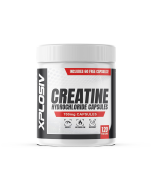 HCL capsules
Xplosiv Creatine HCL 120 Vege Capsules
700 mg HCL capsules, dosed by bodyweight.
Shop NowRelated Reading
Sources
- 01Kreider RB, et al. "International Society of Sports Nutrition position stand: safety and efficacy of creatine supplementation in exercise, sport, and medicine." J Int Soc Sports Nutr, 2017. pubmed.ncbi.nlm.nih.gov/28615996
- 02Antonio J, et al. "Common questions and misconceptions about creatine supplementation: what does the scientific evidence really show?" J Int Soc Sports Nutr, 2021. pubmed.ncbi.nlm.nih.gov/33557850
- 03National Institutes of Health, Office of Dietary Supplements. "Exercise and Athletic Performance — Health Professional Fact Sheet" (creatine section). ods.od.nih.gov
- 04Lak M, et al. "Does creatine cause hair loss? A 12-week randomized controlled trial." J Int Soc Sports Nutr, 2025. pubmed.ncbi.nlm.nih.gov/40265319
- 05Gufford BT, et al. "Physicochemical characterization of creatine N-methylguanidinium salts." J Diet Suppl, 2010 (creatine HCL solubility). pubmed.ncbi.nlm.nih.gov/22432515
- 06Eghbali E, et al. "Supplementing with which form of creatine (hydrochloride or monohydrate) alongside resistance training can have more impacts on anabolic/catabolic hormones, strength and body composition?" Physiol Res, 2024 (8-week head-to-head trial). pubmed.ncbi.nlm.nih.gov/39545789
This guide is for general education only and is not medical advice. Creatine supplements are not medicines and are not intended to diagnose, treat, cure, or prevent any disease. If you are pregnant, breastfeeding, under 18, have a kidney condition or other medical condition, or take prescription medicines, talk to a qualified health professional before use. Competitive athletes should check current anti-doping advice for their sport.